All Posts By

Robert

Preface to the Definitive Roguecleric Commentary on Paul’s Letter to the Romans

By | Cleric Listens | No Comments


This commentary is neither comprehensive nor exhaustive. It is meant to serve as an emendation and corrective to what others have written. I am a great admirer of D. Martyn Lloyd-Jones’s six-volume commentary on Romans 3:20 to 8:39, the portion of the letter he felt was paramount. He left chapter 9 untouched, however, which is a shame. Martin Luther made extensive reference to Romans, saying in his preface to his German translation, “This letter is truly the most important piece in the New Testament. It is purest Gospel. It is well worth a Christian’s while not only to memorize it word for word but also to occupy himself with it daily, as though it were the daily bread of the soul. It is impossible to read or to meditate on this letter too much or too well.”[1] He traces his theological conversion to contemplating verse 1:17, and John Wesley came to personal faith while listening to a sermon that quoted Luther’s preface.

Romans is Paul’s most self-consciously theological letter. Typically, his letters focused on pastoral issues generated by the struggle of living a Christian life in a pagan world. Romans has its share of pastoral admonitions, but from the outset, Paul is looking for opportunities to depart from the immediate to focus instead on the eternal, to use the pastoral as a springboard to address the theological. Once the theological foundation has been laid, he can return to the pastoral. For him, doctrine leads to understanding, understanding leads to hope, and hope leads to godliness.

Paul’s theological concerns revolved around what he calls the mystery of God, namely, how a humanity divided into Jew and Gentile could be reconciled to God and each other that they all might become one. His audience in Rome is predominately Gentile but nevertheless includes prominent Jewish members. Paul is therefore faced with the challenge of introducing concepts that may be novel to one group or the other, without losing touch with either one. Even though Paul was eminently successful in achieving balance in his presentation, we in the West have been relatively unsophisticated in our interpretation of the text.

I maintain that all our theological conundrums are caused by reading a Jewish or Eastern document, the Bible, with a Western or Greek mindset. While this is a problem when reading the rest of the Bible, it becomes critical when reading Romans. It’s not that Paul showed his own cultural limitations by thinking and writing like a Jew, but that as a Jew he was in possession of concepts and insights that cannot be translated into an Aristotelian idiom without alteration and loss. As will become clear in my exposition, there is a reason God chose one people as his medium of specific revelation: a long history of interaction with God has given the Jews a unique spiritual and intellectual heritage. We have to read and think like them if we want to understand that revelation. We in the West have let our cultural and intellectual prejudices obscure the fine balance Paul worked so hard to achieve.

Let me be specific. To really understand Paul, you have to remember that as a Pharisee, he used the rhetorical tools most favored by rabbis in their scholarship and disputations. Chief among these tools is that of symmetrical parallelism, or chiastic structure. Instead of a linear sequence of syllogistic deduction, as Greeks tended to favor, the Hebrew rabbis, Jesus included, would construct an argument that makes a series of points, each following from that which precedes it. They reach a conclusion, and then the argument is repeated in reverse order until they return to the starting point. Thus, the points in a seven-step chiasmus could be viewed as ABCDCBA. Each intermediate step shares a similar thought with its corresponding step. Sometimes these thoughts are simple repetition, sometimes the second is a corollary to the first. This device can be found in a single sentence, a paragraph, or even the whole document. It was used to show the inherent logic of the statements being made; to provide clarity in a written medium that lacked spaces, sentences, paragraphs, capitalization, punctuation, or other delimiters; and to aid in memorization where written documents were the exception rather than the rule. As we will see, to read a chiasmus as linear thought can lead to confusion and genuine suffering.

Another tendency is for Paul to express himself in the form of a diatribe—that is, an informal rhetorical dialogue with imaginary opponents. Sometimes he labels his antagonists, “Now you, if you call yourself a Jew,” but he’s usually content to refer to his audience in abstract terms that render his attacks less threatening. The translation introduces labels that help clarify this back and forth repartee: Paul, Jewish Teacher, or Teacher of Law. Further, Paul employs litotes, where he uses double negatives to assert a positive.

Finally, in addition to what Paul did, we should pay attention to what he did not do. He avoids terms that would tend to defeat his intention of bringing reconciliation to a mixed congregation of both Jew and Gentile. For instance, he avoids the term church in the opening address. Nor does he speak of Christians, for he doesn’t want to act as though Judaism is totally bankrupt and being replaced. Further, he avoids speaking of synagogues because they have historically been the province of Jews alone. He knows God is making a new humanity in Christ, and he avoids using terms that hearken back to old distinctions. Instead, he speaks of family and the unity implied by that concept. His overarching theme is that we can all join God’s family, where he’s a benevolent father who has met all our needs in the person of his son. He speaks variously to Gentiles, then Jews, then back again repeatedly. He’s always mindful of the criticisms his ideas will arouse, and he’s careful to deal with each in its turn. Every once in a while, he’s able to drop his defenses and sing a hymn of praise to God without reservation.

In order to display the rhetorical structure of this epistle, I’ve used Robert Bailey’s translation of the Greek text,[2] the Novum Testamentum Graece.[3] The Scripture is laid out in cascading format to illustrate the chiastic form as perceived by its modern translator, in an attempt to reconstruct what Paul originally intended. Words in italics indicate text not found in the Greek source. The Bailey translation precedes my comments. Robert Bailey and I both provide footnotes for further clarification and commentary—his are primarily concerned with rhetorical structure, mine with exegetical interpretation. His notes appear immediately following the scripture excerpts, while mine follow normal footnote patterns. My footnotes are intended to complement his. The New International Version of the Bible is by necessity a paraphrase, edited in order to read better and offer more clarity. When it provides something the Bailey text misses, I have added it with notation. In addition to using italics for emphasis, words in my comments that are italicized are keywords pulled from the scripture passage. Words that are capitalized in the body of a sentence should be understood as referring to cardinal concepts or typologies.

The overall structure of the letter forms a chiasmus along the lines of ABCBA:


[EXT]A) 1:1–7

  1. B) 1:8–17
  2. C) 1:18—15:13
  3. B) 15:14—16:23
  4. A) 16:25–27[/EXT]


Thus, A and B consist of greetings, housekeeping preliminaries, and buttoning up. The main body of the text, C, consists of insights into God’s plan of redemption that has revolutionized the standing of all humanity, Jew and Gentile, in his eyes. This main body, which is extensive, can be further subdivided as a chiasmus along the lines of ABCCBA:


[EXT]A) 1:18—3:20: Jews and Gentiles have both dishonored God.

  1. B) 3:21—4:25: Jews and Gentiles alike can receive righteousness from God.*
  2. C) 5:1—8:39: All are justified, those who live by the Spirit are also saved.*
  3. C) 9:1—11:36: God’s plan of redemption as experienced by Jew and Gentile.*
  4. B) 12:1—13:14: Life in the Spirit within the church and society.*
  5. A) 14:1—15:13: Potential cultural conflicts between Jew and Gentile.*[/EXT]


* I have renamed all sections except the first and have included these titles in the chapter introductions. Bailey’s original titles are included with the text of the scripture.

It is interesting to note that the major exegetical blunders that have been committed by interpreters of this epistle have occurred in the two sections of conclusion labeled C above. In the case of Romans 5, we have no commentators to my knowledge who make a distinction between justification and salvation, as Paul does. Like Calvin, they assume this is simple parallelism or repetition, not a profound distinction that clarifies the rest of Christian soteriology.[4] In 8:29–30, my exposition shows that a linear interpretation leads to misunderstanding, while a chiastic interpretation leads to clarity and logic. In this way I’m able to offer a reconstituted Ordo Salutis, a genuine first. In the case of Romans 9, most commentators, including Calvin and Luther, adopt a literalistic approach as opposed to metaphorical. The result, especially for Calvin, is an atrocious image of God who hates his creation.[5] Time and again in these critical sections, chiastic structures play an important part in conveying the sense of Paul’s argument. These and other themes are repeated whenever warranted by the text.

Chapter designations in the Bible are arbitrary at best, but they serve to divide the text and commentary into manageable portions. For ease, my chapters correspond with the text of Romans. Because theologians do not always use words in the same way, I’ve appended a Glossary of Soteriological Terms at the end of the commentary to document how I understand these words. I believe I am using them in the sense Paul was. Let us keep Paul’s goals and methods in mind as we read the text and confront those passages that have led to the doctrinal and denominational confusion that characterizes the Christian church today. We should read Paul according to his methods and intentions, not our own.

[1] Luther, Preface, lines 1–2.

[2] Bailey, “God’s Good News to the Romans.”

[3] Nestle et al., Novum Testamentum Graece.

[4] Will Durant says of Calvin, “ . . . we shall always find it hard to love the man who darkened the human soul with the most absurd and blasphemous conception of God in all the long and honored history of nonsense.” Durant, The Reformation, 490.

[5] Frederick Calder writes of Calvin’s view of God: “ . . . as a being of whom, in point of malignity, the prince of the lower regions is but a faint image and expression. . . . far more odious than anything ever dictated by the prophet of Mecca.” Calder, Memoirs of Simon Episcopius, 267–68.


To order this commentary, please use this link: https://www.amazon.com/Romans-Definitive-RogueCleric-Commentary-Rhetoric/dp/172527394


The Ordo Salutis: Corrected

By | Cleric Listens | No Comments

The ordo salutis, or order of salvation, has been a legitimate theological pursuit from the earliest times. The term was apparently first used by Lutheran scholars in the 1720’s, and it refers to the chronology of God’s plan of redemption. Though it has been most thoroughly developed in the Protestant church to fuel the Calvinist/Arminian controversy, it is a useful framework for discussing soteriology in any branch of the Christian tree. Based largely on Paul’s thinking as revealed in Romans 8:28-30, one would think that these three verses would be readily parsed and clearly understood. Instead, the opposite has happened. What appears to be a simple chronology of steps in how an individual is redeemed, turns out to be anything but simple. Taken as a linear sequence, it defies logic and Scripture; as evinced by the on-going controversy it engenders.


It is the intent and purpose of this paper to show that a Greek or Western exegesis of these verses which understands them to be a linear, temporal sequence is in fact in error and untrue to the intent of the author who was himself a Jewish or Eastern scholar. Versed in the rhetorical tools of the Pharisees, Paul used their structures and techniques not to obscure, but to elucidate. Without an appreciation of what those structures and techniques are, it is impossible to understand Paul’s meaning. By recovering that appreciation, Paul’s intent becomes clear, as does the subject of this paper, the ordo salutis.


Chief among Paul’s rhetorical tools was the use of symmetrical parallelism, or chiastic structure. Chiastic structures involve the development of a logical argument along the lines of an X, or chi, where a logical assertion is made, which leads to at least one and perhaps more assertions, eventually evolving into a conclusion in the interior of the structure. Then, the logical argument is repeated in reverse order, wherein each element leading to the conclusion is either repeated or complemented somehow, until the first element is matched. Thus, a seven element chiasmus would be represented as A,B,C,D,C,B,A, where D is the conclusion. Chiasma can be found within a sentence, paragraph, or an entire document; often enfolded within one another. They were used by Hebrew scholars for any number of reasons, including the desire to show the inherent logic of the statements being made, to provide clarity in a written medium that lacked spaces, sentences, paragraphs, capitalization, punctuation, or other delimiters, and to aid in memorization where written documents were the exception rather than the norm. Our appreciation for symmetric parallelism is relatively recent, dating from the late 18th century. Even then, most scholars were content to view rhetorical structures as stylistic phenomena, without particular regard for the ultimate impact they would have on the arguments proffered by the authors. This focus has changed only recently, mostly in the latter half of the 20th century. As a result, culturally sophisticated exegesis has been lacking with regard to the soteriological arguments that have swirled around the ordo salutis. I hope to show that this application is long overdue, and can provide the clarification that Protestant, and indeed all Christian theology, desperately needs.


Application: Romans 8:28-30


Verse 28 is not part of a chiasmus, but instead is an introduction and qualifier for the chiasmus that is to follow. Specifically, Paul is setting forth the group or population of those to whom God issues calls. Is salvation universal? Of course not. The testimony of all of Scripture is that God’s plan of redemption is universal in concept and potential, but in reality is somehow limited in efficacy. Calvin and his sycophants have ascribed this reality to the belief that God has chosen some for salvation and the balance for reprobation on an arbitrary basis, by somehow limiting the atoning power of Christ’s blood on the Cross. Jacobus Arminius, among others, has countered that it is through God’s omniscient foreknowledge of our response to the Gospel that grace is limited to some and not all. I contend that although Arminius’ vision of God is less odious than that of Calvin, it, too, misses the point of this verse. What Paul is saying is that God redeems a select group, to be sure, but it is a group that self-selects according to one criterion: they love God. This accords readily with the balance of Scripture, that says that God has chosen to redeem those of a “noble and good heart,” who “obey,” and put God’s Word “into practice.” There is nothing capricious about membership in this group.


The corollary to loving God is to be called by Him according to his purpose. The temptation here is to see calling as the first step in a logical, temporal sequence in the ordo salutis. I contend that this is premature, and that the second half of this verse is merely stating that those who love God qualify for God’s plan of redemption, which results, as far as the experience of Paul’s readers is concerned, with experiencing a call from God. More anon.


Now for the fun. I would represent verses 29 and 30 in the following form:


A – “For those God foreknew…”


B – “he also predestined to be conformed to the likeness of his Son, that he might be the firstborn among many brothers. And those he predestined…”


C – “he also called; those he called,…”


B – “he also justified; those he justified…”


A – “he also glorified.”


Thus, we see that A represents actions of the Father, who foreknows or elects a certain kind of person, somebody who loves and obeys him and who puts his Word into practice. This kind of favored individual is ultimately rewarded with glory when they complete their service on earth, a “good and faithful servant.” These are monergistic actions that reflect God’s eternal counsels outside of time.


B represents actions of the Son, or developments that involve the instrumentality of Jesus the Christ, and though they, too, are monergistic, they differ from the A themes in that they are subject to historic witness. Note that predestination, a term that occurs six times in the Greek, has no particular soteriological overtones. The other two places in Scripture where it refers to God’s plan of redemption are found in Ephesians, where Paul uses it to encourage his Gentile readers that God, in his eternal counsels, has decided that Gentiles as well as Jews are eligible for redemption. It cannot be interpreted as referring to some sort of cosmic roulette whereby some are consigned to salvation and others to preteration. It simply means something is already decided; it is part of a larger scheme that is inviolate. Here it refers not to the accepted late medieval usage that God predestines some to heaven and some to hell, but rather the determination that those who are elect, on account of their response to the Gospel, will in fact be sanctified or improved upon in an objective way on account of their association with Christ in the person of the Spirit. God is not interested in mere acquittal for a rebellious humanity, but in an actual, observable reformation of manners. Although we necessarily filter and diminish the person of Jesus who dwells in the heart of a Christian, we nevertheless present a more mature, holy and integrated persona than we would have prior to our conversion. It is the Father’s intention that we join a new family, a family wherein he’s the Father and Jesus is the chief sibling, and that we become his agents for the spread of the Gospel and the ultimate redemption of all humanity.


The great imperative suggested by the B theme in this chiasmus is twofold. Mentioned first is the determination of the Father that Christ be found in us; that we play host to Jesus that he might bear fruit through us. Although this violates the logical priority of any ordo salutis in chronological terms, it is mentioned first by Paul because it is contingent. There is an element of synergy here because although our conformance to Christ is a predetermined desire of the Father, it is nevertheless particular because it involves our cooperation. It is not that we must perform a work, that we actively do something of our own engineering, but that we cease to do something, and that is to maintain our rights, recommit Adam’s sin of self determination, and thereby grieve the Holy Spirit so that he cannot work through us. The sacrament associated with the necessity that Christ be found in us is the Eucharist, wherein the believer kneels, and by taking the elements affirms that just as the body requires physical nourishment from without on a regular basis, the life of Jesus in his heart also requires regular nourishment from Him. Here is further proof that a sequential interpretation of these verses serves Paul’s purposes poorly.


The first action Jesus performs for us from a theological perspective is also a B component, but it is presented second because it is a universal fait accompli for all humanity. That is, we are justified, one and all, by Christ’s sacrifice on the Cross. In contravention of accepted Reformed soteriology, there is no limit to the power of the blood of Christ. As we read in the parable of the wedding feast, God invites all to the feast, good and bad. The two accounts of a last judgment in Matthew 25 and Revelation 20 do not mention sin as a basis for disqualification. Rather, what is mentioned in these two accounts is not bad things done, but rather good things not done. In the former account it is largesse withheld from fellow humans, specifically Christians, and in the latter it’s the absence of the life of Christ in us. Just as Christ is expected to be in us, we are all unilaterally placed in Christ from a forensic, legal perspective as of Good Friday. The sacrament tasked with communicating this reality is Baptism, and an associated Confirmation, wherein we both celebrate our prior and efficient justification, and also identify with Christ’s death to self-will that we subsequently allow. The B component of this chiasmus can be summarized as the sovereign determination that there be a complete interpenetration between the believer and Christ, all made possible through Good Friday and Pentecost. What counts in Paul’s mind is not which of the two components is presented first, but rather that these are the historical manifestations of prior determinations of the Father, and as such are trustworthy.


The conclusion to the chiasmus is found in the concept of calling. As Paul said in verse 28, God calls those who love him and who therefore cooperate with His plan of redemption. The Romans were apparently beset with troubles and persecutions, as Paul goes on to acknowledge. Paul places these burdens in context by saying that they are the norm for any person who aspires to follow God in a lost, pagan world. This call, to complete the picture, is the province and action of the Holy Spirit. As Oswald Chambers points out, “The Holy Spirit is the Deity in proceeding power Who applies the Atonement to our experience.” This call can be answered, or it can be resisted. Thus, the logical conclusion to Paul’s picture of God’s plan of redemption is that there are monergistic actions outside of time, A, that are the Father’s province alone. Then there are monergistic actions, B, that culminate in events in time and history, one of which is independent of human response, and one of which is not. C represents God’s decision to involve his human children, and it therefore becomes contingent in some way. For the plan to work there must be a synergy between God’s plan and our heart. Our action is not positive that it be regarded as a Pelagian work, but rather a negation, the cessation of a work: the pernicious work of rebellion initiated by Adam.


A reconstituted ordo salutis from God’s perspective would be as follows:


1) God elects those who love him, as a class, to participate in his plan of redemption.

2) God determines that those who love him will join a new family as his children, and predestines that they will be conformed to the likeness of his Son.

3) God ordains that Jesus should die on a Cross in place of a sinful humanity and thereby justifies all. God raises his Son from the dead to validate our justification.

4) Jesus ascends to his former glory as previewed in the Transfiguration.

5) As of Pentecost the Spirit of Jesus is poured out on all who are willing to accept righteousness and power vicariously from Jesus.

6) God commands his children to preach the Gospel to all the world that all might perceive a call to membership in God’s family.

7) God confers glory on all those who bear fruit.


All these are monergistic decisions that God has made from eternity, God being something of a supralapsarian, knowing that a free humanity would fall and require redemption. Four of them have historical referents, events witnessed in time and place, though proceeding from God’s eternal counsels, and having efficacy not limited to time or place.


A reconstituted ordo from man’s perspective would be as follows:


1) We hear the Gospel preached and our conscience bears witness to its truth. It is attractive because it posits monergistic actions that bring assurance. We learn that God is both rational and kind in terms of whom he favors and rewards. We find that in Christ our two major problems are solved, those of guilt and powerlessness. We realize that a response to these unilateral actions on God’s part is warranted. They constitute a personal call.

2) Such a gracious Savior has the right to be Lord; we cede our will to him.

3) The Father confers the Holy Spirit on all that are disposed to receive both righteousness and power vicariously from Christ. Sanctification begins, we are conformed more and more to the likeness of Christ.

4) Empowered by the Holy Spirit, we bear fruit in other lives.

5) At death, we receive glory and honor as a good and faithful servants.


Conclusions


The advantages of an exegesis of Romans 28-30 that takes Hebrew rhetorical structures into account are many. First of all, it delivers us from the illogic of a sequential model that makes no sense. To place justification, which is universal, near the end of a temporal sequence, is to require the development of fantastic concepts such as limited atonement. To interpret calling, the end of the process from the perspective of human agency as first, and make it a synonym for election, is to deny humans the role in their redemption that God has graciously offered. Foreknowledge, which is in fact a synonym for election, no longer has to refer to the arbitrary selection of some individuals over others, but rather refers to God’s legitimate and fair decision to seek collaboration and fellowship with people who love him rather than those who hate him. Predestination is liberated from reference to foreknowledge, election, calling or choice, to refer instead to a simple desire on God’s part that his love and power be evinced in real lives in real history with real benefits for all. Perhaps glorification is the only step in the ordo salutis that emerges from the pages of history with something of its actual meaning intact, that God can and will reward those who please him at the heavenly banquet.


Most importantly, a culturally and intellectually correct exegesis of these verses allows an ordo salutis that conforms to the clear intent of the balance of Scripture, particularly the parables of our Lord. Most notably, it solves the conundrum of universality and particularity in redemption. All are invited and justified, but not all are saved. How can this be? Paul makes a distinction between justification and salvation in Romans 5:9,10 and 10:9,10. They are not the same. All are delivered from moral guilt, not all are spared at a second judgment, this time not for sin, but for fruitlessness. Jesus is Savior of all, but evidently he is not Lord of all. To bear fruit you must play cooperative host to the Holy Spirit, for apart from Him we can do nothing. Unless we bear fruit, as represented by wedding garments freely offered to all guests, we will be evicted from the presence of God. The branches that are burned as useless were originally “in Me.”


Further, these verses conform to a larger, coherent soteriology. Two actors: God and man. Two problems: guilt and powerlessness. Two solutions, both involving Jesus: his death and his life. Two historic events: Good Friday, and Pentecost. Two sacraments: Baptism and Holy Communion. Two titles for Christ: Savior and Lord. Two judgments: Good Friday and the Final Judgment. Two outcomes for man: glory or reprobation.


The only hope for ecumenical rapprochement and effective evangelism is an accurate understanding of God’s plan of redemption, the ordo salutis. As long as churches, denominations, communions and factions cling to their shibboleths of soteriological error, the Church will be enervated and the parousia delayed. Christ, a gracious groom, waits in his Father’s house for a bride to reach a maturity that will allow their marriage and the consummation of the ages. For two millennia an accurate explication of God’s mode of redemption has been before us. If we can learn to love him with our scholarship as well as our hearts, we can break out of our self-imposed limitations and become the children, and Church, God has always intended us to be.


Mother’s Day Collect

By | Cleric Comments | No Comments

Heavenly Father, we thank You for the gift of life, and for the privilege of being part of the mystery of its creation.  We thank You for the mothers who conceived, bore, and nursed us; who dressed, fed, and worried about us.  May they be blessed with the knowledge that what they did, they did not only for us, but on Your behalf; being the hands, arms, hearts of God bringing blessings to His little ones.

Lord, we also ask Your special blessings on those women who for any reason do not have children.  For all those who desired children but could not have them, or those who lost children through miscarriage, abortion, adoption, or death.  May Your comfort and love be real on this most difficult day.

And finally, Father, may Your blessings be on the little ones who will be mothers in the future.  May they find godly, loving husbands; may they delight in life and marriage, and may the Holy Spirit protect them in an uncertain world where mothers and their love will be more important than ever.  Amen.

Open Letter to Atheists

By | Cleric Comments | No Comments

There’s a great exchange in The Princess Bride when Inigo Montoya hears his Sicilian boss Vizzini lisp for the umpteenth time, “That’s inconceivable.” Indigo replies, “You keep using that word. I don’t think it means what you think it means.” When I hear people characterize themselves as an atheist, I want to respond likewise, “I don’t think it means what you think it means.” Let me explain.


When people pronounce themselves an atheist, they think they are making a theological statement. They are talking about God, his unreality. They are saying that the universe has only a physical, not spiritual, dimension. Religion in any form is therefore a chimera that may have some social utility, but which lacks any basis in fact. Should it be so easy! What the atheist doesn’t realize, however, is that when they start to theologize about God, they are also making statements about people; existential, political, and psychological statements of the most profound sort.


First and foremost, the person who rejects the existence and self-revelation of God is making an existential statement about themselves and others. They are saying that each person is essentially and permanently alone. This has good and bad implications. The good implication is that we are free. Free from accountability, free from interference, free from judgment. We can do whatever we want, and will never be asked to justify our thoughts, words, or deeds. We are attracted to this idea because we are by nature rebels, and hate being told what to do, or not do. But absolute freedom has bad implications as well, for perfect freedom also implies perfect solitude. When in need, who does not want help? When happy, who does not want to share? None of this is possible to the strict atheist, they are alone in the cosmos. Further, when confronted with death, theirs or others’, the atheist must be willing to look forward to extinction with equanimity and dispassion. As one atheist friend said, “When I die, it’s poof; nothing.”


There is also a psychological burden the atheist must bear. Life without the possibility of failure also lacks the possibility of success. For what do we strive, for what do we hope? If there is no goal in the universe, there is no value to how life is lived. The way things are is fine, including the imperfections. The world is the way it is, and to speak of improving it is not only forlorn, it is a waste of time. Ditto with individuals; they are the way they are, and there is no possibility or need of improvement. The drunk should stay drunk, the killer should continue to kill, the thief should continue to steal. Who cares? Who are you to say that something is right or wrong? You arrogant bastard! Why not rape and pillage? Why not make children cry? Who gives a damn? Why start anything? Why finish it? What is beauty? What is nobility? Why have rules, why be fair? Why not maximize personal thrills and comfort at the expense of others? If this life is all there is, only the weak, the ineffectual, the fearful will not do all they can to impose their needs and desires on others. As Oswald Chambers says, “If I have never been a blackguard, the reason is a mixture of cowardice and the protection of civilized life.” The conventions of marriage, self control, self-sacrifice and altruism are signs of weakness and moral fecklessness. The atheist is duty bound, if self-actualizing and consistent, to live this life with a view to maximizing their own advantage, without regard to the rights or desires of others.


Then there is the social or political angle. When somebody professes atheism, they are, if they are being honest, talking about the kind of world they want to live in. What they are saying is, biological life, including humans, is random; it just happened by accident. Therefore, there is no moral authority to be found anywhere in the universe. What you see is what you get. The concepts of right and wrong are at best sentimental notions that have no real force in the grand scheme of things. In other words, Adolf Hitler was right. Now Adolf was a lousy general, but he was a great politician and an even greater philosopher. What he said was this: what counts in human affairs is not silly ideas about the sanctity of human life and vague notions of right and wrong. Rather, what counts is strength, on personal, national, and racial levels. If I can impose my will on you, and he spoke of his personal will a great deal, then I have the right, indeed the obligation, to do so. He, like Charles Darwin, would say that the drama of biological life takes place not on the level of the individual, but rather on the level of the species. Now Adolf is an unpopular person, but I challenge you so say why he was wrong without reference to some theistic notion. He made 50 million people die. So what? He made countless others unhappy. Who cares? His only problem, if you’re a consistent atheist, is that he actually put his ideas into practice. Consistent, but impractical. When considering great atheists like Hitler and Stalin, you have to offer grudging admiration for the fact that their actions were logical extensions of their beliefs.


In contrast with these doers, you have most modern atheists and theists who are so vague about the content of revelation that they are, for all practical purposes, themselves atheists. On the one hand, they say there is no absolute standard for religious truth. Then on the other, they hold themselves and others accountable to a high moral standard on matters they consider important: be green, honor Mother Earth, co-exist, Namaste, lower your carbon footprint, stop global warming. All this is just so much bullshit if you’re really dedicated to the notion of atheism. A consistent atheist is an opportunist.


Viewed in this way, atheism has two inherent drawbacks. First, it’s a lot of work. The atheist considers himself privy to knowledge that sets him apart from and above all theists. It takes energy to be constantly processing the mistakes and foolishness of others. You are saying that most human achievement is at best a waste of time. Forget art, talent, love, all that smarmy stuff the world chases after. It is almost impossible to be consistent on this point and not generate a great deal of friction with others and within your own psyche. Forget trust. Stay on your toes. You’re the only advocate you have, so keep your guard up. Atheism is at its heart intolerant. It is absolute. It removes all middle ground. It denies mercy, it invalidates humanity; it makes us an animal; reptilian, inviolate perhaps, but utilitarian in the extreme. Most people who live out their atheism are dead or in prison.

The second drawback is that to be a good atheist, you must become religious yourself. To believe that God doesn’t exist requires a much greater leap of faith and denial of facts than any theistic position. You must be willing to overlook all evidence that suggests there is a benevolent Creator in the universe. All charity, all improvement, all mercy, all generosity; it’s all misguided claptrap that can seduce the unwary into believing there’s a moral component to the universe. You have to be able to say, with a straight face, that random chance is the author of everything we see and are. The drunk who stops drinking, the thief who stops stealing, the bad man made good, these are falsehoods that need to be confronted, unmasked, and derided. Jesus Christ is not God or even a good man, but either deluded or the personification of evil. And what of his followers? As Paul said, “If only for this life we have hope in Christ, we are to be pitied more than all men.” And not just pitied, but opposed. Close those hospitals, soup kitchens, foreign missions that dig wells, and clothe, feed, provide medical relief for and educate the bereft. All so much nonsense, as they are trying to ingratiate themselves to unbelievers, only to mislead them with false hopes.


Atheist. One small word with sweeping implications. With Inigo Montoya, I say once again, “I don’t think you know what that word means.”

Cause And Effect

By | Cleric Comments | No Comments

Okay.  It’s an election year, and once again I’m hearing that our nation is more politically polarized than ever.  It’s said there is a general loss of civility, and if we would just mind our manners, we could learn to get along.  Although it does seem as though people are in fact letting their manners slide, I think such hand wringing is actually counter-productive.  By calling attention to the how of the current debate, we are tempted to ignore the what, which is the crux of the matter.  I believe that liberals and conservatives are so profoundly different in terms of how they look at the world and the human experience that sharp divisions about public policy are inevitable.  Moreover, these divisions will prove increasingly intractable unless deep-seated presuppositions that cause them are exposed and dealt with.

There are actually two problems that need to be addressed.  The first is this: at what level do liberals and conservatives originally diverge?  Do they diverge, as some say, at the point that some want to help people, while the other side does not?  Or do they part company at an earlier point, where the very definition of help is different?  Until the point of original separation can be pinpointed, no commonality in later debate can be hoped for.  Until there is a clear statement of the problem, there can be no expectation of a solution.

So let’s start by assuming that both sides want to help people.  No divergence there.  But what constitutes help?  That depends on what we need help from.  Politics is about solving problems, so what is the source of the problems from which we need deliverance?  As we try to answer that question, we start to see divergence.

The liberal view is that problems come from without; people are inherently good and industrious, and if we are not experiencing prosperity, it is on account of some obstacle raised by others.  Racism, gender discrimination, economic disadvantage, lack of educational opportunities, you name it; these are stumbling blocks the poor person has no control over, they are imposed from without, by others.  By removing these impediments, the liberal hopes to release the natural goodness stored up in people.  All our affirmative action programs, sensitivity training, race and gender quotas and general political rectitude find their justification in this benevolent view of man and the world he lives in.  A classic example of how the philosophy of man forms political conclusions is Karl Marx, who said that man is good, but capital is bad.  Take capital out of the equation through communal ownership, and you have the perfect society where man is free to prosper.  This philosophy has been adopted hook, line and sinker by the media and secondary and university schools.

In stark contrast to this attractive yet sentimental view of man is the conservative perspective.  What the conservative says is that man is anything but benevolent and prone to selfless industry unless it is required of him.  The conservative goes on to say that given a choice, man in his natural state will do as little as possible to get as much as possible, and cannot or will not change unless forced.  Mankind, he says, tends to selfishness and laziness, and thus man’s problem lies within each individual, not in the larger society.  Conversely, there is no obstacle raised from without that can subdue a person’s will that is properly aroused.  The economic implications of this view were best expressed by Adam Smith, who said that it’s not altruism but rather self-interest that leads to the efficiencies and economic gains that can really set people free.  The antecedent philosophy of man can be traced to the Bible.

So a first area of divergence between liberal and conservative can be said to be regarding the locus of the problem from which we are seeking relief.  But this observation begs further questions.  What does this view of man say about the world we live in?  Is there such a thing as right or wrong?  Are there moral absolutes that govern human choices and behavior?  Moreover, what does it matter that we do right and avoid wrong?  Are there consequences to choices in this life, and what of a life to come?  Is there a God who cares and who takes note of our choices, or do we just prefer a society that has social customs that bring order and peace?

This brings us to the second of the two problems alluded to above.  That is, are we really free to explore the origins of the divergence between liberals and conservatives?  I posit that liberals, who tend to deny the existence of moral absolutes and the Divine, cry foul when the debate goes back as far as it needs to in order to really accomplish anything.  Although liberals claim the moral high ground, they balk at attempts to ground that morality in something more concrete than a general feeling or Darwinian expedience.  Any reference to propositional truth or “religious” inferences are said to be “personal” at best and “unconstitutional” at worst.  Therefore, discussion of the basic assumptions that separate liberal and conservative thinking and subsequent public policy decisions is prevented by saying that the debate cannot include those very values that must be agreed upon if progress is to be made.

So lacking common philosophical ground, is there anything that can be done to stop what Swiss psychiatrist Paul Tournier calls a “dialogue of the deaf?”  Rather than starting with ideas and asking that everybody think, perhaps we can start with facts, and ask that everybody look.  Shouldn’t it be possible to observe and measure human behavior?  Aren’t there situations where the divergent theories about the nature of man are able to predict what will happen, and by observation and measurement, we can tell who’s right and who’s wrong?

What the liberal philosophy states is that good public policy should not concern itself with rewards and punishments for individuals.  The problems do not originate within the individual, therefore neither should the solutions.  As a consequence of this conviction, all liberal public policy measures seek to ignore the decision making and behavior of the individual citizen; it is expected that these will reform when the true causes of suffering are taken care of at the societal level.  This is why government is the chosen instrument of reform for all liberal causes.  “The government must lead,” to quote our current President.

By contrast the conservative view is that just as there are natural laws like gravity and temperature, there are moral laws whose consequences can be observed and codified.  To violate them and expect no consequence is the same as jumping off a cliff and not expecting a hard landing.  Good public policy, they say, should be based upon strengthening, not weakening, these mechanisms of cause and effect, so that the individual can learn, change and grow based on their experience.  In the same way Adam’s Smith’s invisible hand led individuals to make decisions that were good for the economy as a whole, so too the individual who has the guidance of cause and effect in laws will make personal decisions that benefit society as a whole.

Here is our chance to raise the level of debate from name calling to science.  Each of these perspectives, as divergent as they are, can predict behavior in actual life cases and be tested for veracity.  Think about it.  If the liberal is right, then there should be cases where societal obstacles have been removed, and people prosper and improve their lot in life naturally.  By contrast, the conservative view should also be measurable.  When punishments have been provided for doing wrong and rewards for doing right, have people tended to change their behavior and reform?  Conversely, are there cases where consequences for decisions and actions have been removed, and people start to misbehave?

Here are some concrete ideas for analysis.  According to the liberal view, people who receive government aid should only do so for a period of time until their improved fortunes allow them to get off the dole.  This can be measured.  Are welfare rolls static, or dynamic?  Are people getting on, finding help, and then getting off, or are they staying on?  How about people who receive free health care from hospital emergency rooms?  Do they use the money they save to buy health insurance, or do they continue to use hospitals as primary care institutions because hospitals are not allowed to turn people away?  Do those who claim to be unable to afford health insurance have cell phones, buy lottery tickets, smoke cigarettes or buy cable TV?   And what about when society becomes unregulated?  What happened in New Orleans when thousands of people disobeyed the evacuation order and destroyed much of what Hurricane Katrina spared?  How do you explain looting in civilized societies when the police are inhibited or the power goes out?  Although the work has yet to be done, or reported in the press, research into questions like this will help by substituting facts for rhetoric.

The conservative view of man can also be measured.  Does Singapore have a drug problem?  No.  Why not?  Because if you are found using or selling drugs, you are beaten or executed.  No questions asked.  Cause and effect.  Is there a correlation between the economic health of American cities and how recently they’ve had a Republican mayor?  Yes, and it’s almost perfectly inverse.  And speaking of Detroit, did the American auto makers take note of decreasing market share and improve the appearance, performance and quality of their cars in time to stave off disaster?  No.  They made no changes until they were forced to.  When the rules of cause and effect are suspended, not much happens.  Not much good, at any rate.  What role did the Great Society programs of the 1960’s play in driving men from homes?  What is the impact on the behavior of children when there is no father in the home?  Is there a correlation between voting behavior, liberal versus conservative, and obedience to laws, particularly those controlling recreational drugs?  These are legitimate questions that deserve careful study and dispassionate answers.

If research does establish that liberals are inaccurate in their understanding of human nature, then more than their political agenda will have to be revised.  Remember, their public conclusions were based upon assumptions about the individual person that, if wrong, would suggest that what they’ve been doing for people is actually hurting, and not helping, them.  By telling people that your decisions and actions need not be taken into account, they have created an intellectual and psychological under class that can only grow.  It’s almost as if liberals generate poor people to not only give themselves jobs in the give-away programs they so love, but also derive a perverse sense of purpose they could not otherwise have if there were no poor.  If they were to admit to the existence of moral absolutes or moral cause and effect in the world, they would undermine their position as benefactors and arbiters of rectitude.  To admit the existence of the absolute or the Divine would, in other words, be bad for business.

So do not be surprised by the vitriol generated in the coming election.  There will be name calling, lying, twisting the facts, and attempts to manipulate an unsophisticated and ignorant electorate.  This is to be expected.  What is sad is that the conservative candidates will probably not avail themselves to the best defense in cases of libel, and that is to simply report the truth.  Do these studies, come up with the facts, use sociology to dispel myth, all to show how “helping” people has actually resulted in their enslavement to a new master more evil than the first.  We should not adopt a philosophy, theology or political badge for any other reason than because it explains the world as it can be observed, in other words, because it makes sense.  Don’t believe something because it feels good, believe it because it works.


Colin Kaepernick and Cultural Realities

By | Cleric Comments | No Comments

It can be argued that race relations in the United States are at their lowest ebb in decades.  Police shootings, riots, and now football players refusing to stand for the National Anthem, they all polarize to a degree not seen since the acquittal of Rodney King’s attackers.  Whatever you make of Colin Kaepernick’s actions, he speaks for many when he says that “black people and people of color” are subjected to “oppression.”  He continues: “there are bodies in the street and people getting paid leave and getting away with murder.”(sic)  Many commentators have lauded his actions, saying that at the very least, they will engender conversation and discussion about the current state of race relations in this country.  So in the spirit of such conversation and discussion, let’s see if Mr. Kaepernick is justified in his allegations about systematic oppression in the U.S. legal system.

Most complaints about our legal system start by pointing out that blacks are incarcerated at a rate several times higher than that of whites.  This is true.  In 2010, whites constituted 63.7% of the population, while blacks constituted 12.2%.  Prison populations in 2016 were 58.7% white, and 37.8% black.  This shows that blacks are overrepresented in prison population by a factor of 336%.  Taken by itself, this would suggest that the legal system is biased against blacks.  The only problem with this conclusion, however, is that the prison population must be understood not in terms of racial percentages in the overall population, but rather in terms of the number of crimes being committed.  To fail to control for the number of encounters members of different races have with the police, you violate a fundamental principles of statistical analysis.  It is estimated that black males have police encounters at a rate 5 to 10 times higher than white males.  If this is true, then conviction and incarceration rates for black males are actually lower than for whites based on how many confrontations they have with police.

Do police practice racial profiling that results in an increased likelihood of arrest for blacks?  When statistics for serious crimes are examined, where police are responding to calls and not initiating contact, it appears that profiling is not an issue. In urban settings, understood as America’s 75 largest counties, blacks constitute 62% of all robbery defendants, 57% of all murder defendants, and 45% of all assault defendants, while constituting just 15% of the population.  Between 1980 and 2008, 52% of homicides in the US were blacks killing blacks.  In 2013, blacks committed 38% of all murders, while whites committed 31%; a startling imbalance in view of the respective population percentages by race overall.  Black males are 6.6% of the population, yet in 2012 they committed 5,531 murders.  There appears to be a disproportionate level of violence among blacks that cannot be accounted for by police bias.

Now, what about police/black shootings per se?  As of July 9 of 2016, of the 440 people police shot, 54% were white and blacks were 28%.  For 2015, of the 987 police shootings, whites constituted 50% and blacks 26%.  When one controls for the higher incidence of black/police encounters, it is clear that police are less likely to shoot a black man than a white man.  In a Houston study, blacks were 24% less likely to be shot by a police officer than whites.  Controlled threat scenarios provide further evidence of police restraint when dealing with black suspects.  This is in spite of the fact that encounters between police and black males constitute a greater threat to the officer than encounters with white suspects.  When a police officer is killed by a person of known race, 44% of the time the killer is black, while 51% of the time it’s a white person.  Again, totally out of line with overall population.  A policeman is 18.5 times more likely to be killed by a black male than a black male is to be killed by a police officer.  12% of whites and Hispanics who die by homicide are killed by police, while only 4% of black homicide victims are killed by police.

What about police shooting unarmed victims?  In 2015 police fatally shot 36 unarmed black males and 31 unarmed white males.  When you study the individual cases, you find that in many of them, extenuating circumstances render “unarmed” a rather dubious distinction.  At least five of the black victims had fought the officer for his gun or were beating him with his own equipment.  Some were shot from accidental discharges of the police weapon, one officer was beaten unconscious, and another victim was a bystander who was struck by a police bullet in an exchange of gunfire with an armed offender.  Mr. Michael Brown of Ferguson, Missouri, was classified as an unarmed black male shot by a white police officer.  Prior to his death, Mr. Brown had struggled for the officer’s gun, turned away, then turned once again and advanced toward the officer who fired non-lethal shots in vain attempts to get Mr. Brown to stop.  The police officer was eventually cleared of wrongdoing.  There are instances of police shooting black suspects without genuine provocation, but the number of cases is infinitesimal when compared to the number of arrests in cases of violent felonies, almost 500,000 last year alone.  The real tragedy in all the publicity about police shootings is that police are starting to patrol less and cut back on interaction with black citizens, leaving the playing field more open to criminals and citizens unprotected

So, what we see is that when we practice legitimate statistical analysis, we can come to only one conclusion: there is no evidence for a pervasive bias against blacks in the U.S. legal system, starting with the reporting of crimes to the police, and extending to police response and arrest, court conviction, sentencing, and finally, to incarceration and probation practices.  The appearance of such a bias is simply the result of there being a higher incidence of criminal behavior among black citizens, notably black males.  So why is this?  Is it lack of educational and economic opportunities that compel blacks to resort to crime?

Studies show that while blacks typically do less well in school, they nevertheless have the opportunity to go to college and acquire skills that will allow them to compete in society.  Black children start out elementary education with lower verbal and numerical skills than white children, as do Hispanics.  As they progress through elementary education, however, the gap between whites and blacks grows, while the gap between whites and Hispanics, for many of whom English is a second language, narrows.  By the time they get to high school, only 56% of black students graduate, while 78% of white students do.  Overall dropout rates by race are 7.3% for whites, and 20.9% for blacks.  When it comes to standardized tests for college entrance, black students score a full standard deviation lower than whites, meaning lower on the scale by 1/3 of the overall population.  In spite of this, black students do have access to higher education.  Historically, 70% of white kids continue on to college, while 65% of black students do.  In 2014, those figures were reversed, 71% for blacks, 67.3 for whites.  The rumor that there are as many black men in prison as college is not true.  Of the 3.26 million black males of college age in the United States, 1.4 million are in college against a total black prison population of 821,511.  The argument that black students do not have access to educational opportunities is not true, at least at the collegiate level.

Education is important, because it has been shown to co-vary with subsequent earning power.  While we’ve seen that blacks do have access to college education, it is nevertheless true that income levels in the U.S. are disparate when examined by race.  Whites earn an average of $57K annually, while blacks earn $33.3K.  The question then is, why?  Is there discrimination in terms of jobs offered and wages paid because of race?  To answer these questions it’s necessary to look at the structure of black families that are experiencing economic pressures.  For one thing, many black households have only one parent, and thus one wage earner.  The marriage rate among black families is lower than that of whites, and is declining.  Only 32% of blacks are married, blacks have a higher divorce rate, and stay married less long than whites.  Further, early pregnancy forces many black females to abandon their education and start working, often at lower paying jobs that require less formal training.  Studies have shown that illegitimacy and single parent upbringing both correlate with poor academic performance, and subsequent lack of earning power.  It appears that although there is a correlation between black race and lower earning power, this is not a causal factor.  To say blacks earn less because they are black is to commit what in statistical analysis is called an ecological fallacy.  This means that although two factors co-vary, they do so not because one causes the other, but because both are caused by something else, a third factor.  In the case of employment opportunities and earnings, it appears as though the causal factor is lack of education and training.

This brings us to the real point of our inquiry, and that is, what leads to a situation where by the age of 23, black males stand a 41% chance of being arrested?  In 1965, Daniel Moynihan, a Democrat, published a study in which he predicted that the “destruction” of the black family would inhibit further progress for blacks to achieve economic and political equality.  The relevance of his prediction is that the black nuclear family, with two parents present, was the norm from 1880 until 1960.  The most credible hypothesis as to why there was a sudden change in the 1960’s is that the Great Society programs of social welfare relief were targeted at single parent families, a fact that rendered husbands and fathers an economic liability.  These programs were championed by Lyndon Johnson, a Democratic President.  Here is the sociological legacy of these programs: by 2011, 72% of black births in America were illegitimate, by 1992, only 25% of black families were nuclear, with biological parents and biological children present.  By 2005 39% of black children did not live with their biological father, versus of 15% for whites.  31% of black fathers rarely or never visit their biological children.  62% of black women are single parents, versus 33% of white women.  The absence of fathers in homes of any race has been proven to correlate positively with poor academic performance and teen pregnancy.

Taken as a whole the sociological evidence suggests that the problems blacks have with the legal system are not the result of a bias or conspiracy on the part of a predominantly white establishment, but of behavioral problems within the black community itself.  And if true, why among blacks more than other races?  If white America were truly discriminatory, we would expect other racial minorities, especially those of recent arrival, to have similar problems.  This is not the case.  Asian immigrants consistently outperform white counterparts in education and earning power, and are incarcerated at rates a fraction of their population percentage.  They constitute 4.75% of the population, but only 1.5% of the national prison population.  Other races and cultures are prospering under the same political and legal umbrella afforded blacks.  Could it be that black Americans have developed a culture that condones, if not encourages, a nihilistic attitude towards the prevailing morality of white America?  Allan Bloom, in his seminal work, The Closing of the American Mind, argues that black students at American universities are unique among races in their cultural consciousness.  He writes, “…it is peculiar in that blacks seem to be the only group that has picked up ‘ethnicity’ … in an instinctive way.  At the same time, there has been a progressive abandonment on their part of belief or interest in a distinctive black ‘culture.’  Blacks are not sharing a special positive intellectual or moral experience…”  I understand him to be saying that it’s not as if blacks have a separate and distinct culture, as much as they lack a culture at all.  If true, this is devastating, as culture is the conveyor of moral values that form and reinforce personal character and decisions.  Issues of dropping out of school, using drugs, engaging in premarital sex, gang membership, and engaging in crime are only wrong if somebody or something, a prevailing culture, says they are wrong.  In the absence of moral boundaries, anything goes, to the detriment of all people of all races.

This brings us back to our conversation.  Although there is plenty of sociology to provide answers in the racial debate, we’ve been slow as a country to consult actual science.  This is because if somebody talks about facts and behavior in the context of race, they are labeled racist and debate is curtailed.  In order to have genuine dialogue, a dispassionate exchange of facts is required.  There must be a distinction between race, which is ordained by Nature and not volitional, and culture, which is generated and sustained by people and is fully volitional.  This was the vision of Dr. Martin Luther King, who said “I have a dream that my four little children will one day live in a nation where they will not be judged by the color of their skin but by the content of their character.”  He was not condemning judgment per se, rather he invited it, but along justifiable lines, not arbitrary ones.  His vision was that skin color would no longer be the basis of either discrimination or exculpation.  Defined this way, Dr. King would himself be classified not as a racist, but as a culturalist.  Can we not revive his example and introduce a new concept that will defuse the emotion of what is essentially a debate about behavior in America?  Until there’s an accurate diagnosis of the problem, there can be no effective and lasting cure.

So Mr. Kaepernick is to be commended for his call to conversation and discussion of the root causes of racial tension in America.  There are many, both black and white, who like him are disgusted at the present state of race relations and want them to improve.  The best strategy is to drop the whole issue of race; it’s a chimera.  Let’s talk instead about culture and resultant behavior.  Talk about things we can change, not things we can’t.

“Believe In Yourself”

By | Cleric Comments | No Comments

As Christmas approaches, we are inundated with smarmy, maudlin exhortations to believe in ourselves, to do the right thing, to make extra efforts to transform the world through extraordinary effort.  This is all fine and good, except that it’s doomed to failure.  All this comes from bad theology.  When we don’t understand God or his word, we can’t understand ourselves.  What his word says is that we are noble, lovable, worth the life of his Son, but ultimately frail, afflicted, and incapable of doing any good thing in and of ourselves.  To exert ourselves apart from extrinsic, divine help, we set off on a course that is, sooner or later, going to founder.  If you think people are good and capable of success apart from spiritual help, it will affect everything you do.  You will ask young children questions and seek to fulfill their every whim.  In doing so, you do not create a loving  adult, you create a self-centered monster.  You will believe the criminal when they say they will reform, and grow lax in the administration of justice that protects the innocent and induces the guilty to repent.  You will believe the politician who tells you the fault lies with others and not you, and you will give other peoples’ money away in order to make yourself feel you are progressive and loving.  There is no realm of human existence that will not become misguided and ineffectual if you believe the lie that humans are fine as long as they have the right information and are not hindered by retrograde prejudices.  The only thing that will save us is better theology that leads to better anthropology: within us lies no good thing, and the only explanation for human history is a Biblical view of Man.  So don’t believe the beauty queen or singing contest contestant who tells you, “You can do anything if you believe in yourself.”  You may be able to do anything, but it’s not anything good for yourself or others.  The key to a right treatment of a problem is a right diagnosis, and that can come only from the One who made us and knows us best.  And, remarkably, still loves us.


Identity and Culture

By | Cleric Comments | No Comments

When challenged to write about culture, I immediately dashed off a screed about how a culture with bad theology inevitably ends up with bad anthropology; if we don’t see ourselves correctly in a cosmic sense, we’ll never see ourselves correctly in any other domain.  This was not exactly uplifting holiday stuff, so I took my wife’s cool response as a suggestion I chose another topic.  So here goes: I’m going to write about my peronsal culture.  Tim Keller says that white people are the only people who think they have no culture; the way we do things is just the way things are supposed to be, and everybody else has a culture that sets them apart.  He contends we do indeed have our own culture, and we just don’t know it.  So I’d like to take a minute to explore what my culture might be, using my illustrious forebear, Roger Sherman, as an example.

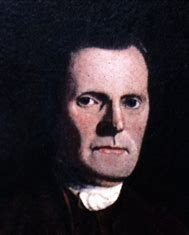
I am Roger’s five times great grandson, through his second wife Rebecca.  Roger was the only man to sign all five of the founding documents establishing the United States of America.  Nobody else even signed four.  He is less well known than the other founding fathers, although his role at the Constitutional Convention was rivaled only by James Madison. He served as a legislator, judge and mayor in Connecticut and in the new House of Representatives and Senate.  His age, lack of elocution, and his role as legislator as opposed to executive have kept him hidden from political glory, but a case can be made that he was the most influential of all the founding fathers.  He is known as the author of the Connecticut Compromise, and he was also the defining force behind the Bill of Rights.

This brings us to his influence on the culture of our nation today.  Who was he, and what did he stand for?  First and foremost, he was a Christian.  He was a Calvinist and Puritan, in whichever order you would prefer those terms.  Although I’m not a fan of Calvin in the most detailed aspects of his soteriology, Calvin nevertheless had a salubrious influence upon Mr. Sherman.  Specifically, Roger shared Calvin’s dim view of human nature, and felt that human institutions, like the humans who made them, were subject to study, evaluation, and when found wanting, subject to rejection and change.  Thus, a Christian could at one and the same time be a supporter of law and government, while at the same time being a revolutionary.  Further, Roger saw that those who serve in government should do so in keeping with an interior morality based upon the absolutes conferred by Christian faith.  He opposed the appointment of Gouverneur Morris to a post as legate to France because he was “irreligious and profane.”  Roger thought that a man with a weak moral foundation could not be trusted in the affairs of state.  He would be appalled at the attempts of modern scholarship to say that there is to be no cooperation between Church and state in the government of human affairs.  In his day, there was an established church in Connecticut, and Roger handed down a sentence as judge against a man convicted of not attending church.  The Federal government was not to establish a church, but states were both allowed and expected to.  Scholars have preferred to interpret the Bill of Rights in keeping with the ruminations of Jefferson, who was in France while it was being written by Roger Sherman back in America!  Roger was also far-sighted, knowing that short term political accommodation could bring long term humanitarian benefits that outweighed the immediate costs.  Do what you can now, to bring about the ultimate goal you seek.  He understood the shortcomings of the Articles of Confederation, and urged the adoption of an entirely new Constitution, though he was always a champion of states’ rights and an opponent of an overly powerful Federal government.  Many of the excesses of modern government could be avoided if we would only listen to what Roger was saying during this period.  

In all these areas we see Roger Sherman being an integrated individual.  He was not a man rent asunder between body, mind and spirit, but rather one whose spirit informed his mind, and whose mind controlled his body.  As such, he was a prime example of the kind of person who immigrated from Europe to the New World with the express intention of making a new life in a new land that was profoundly rational and correct.  There was no distinction between secular and sacred; all was understood and appreciated in its proper time and place.  I would like to think that I’m not only a heritor of his genome, but of his spiritual, intellectual and social views; in other words, his culture.


Election Reflection

By | Cleric Comments | No Comments

If you’re like me, you spent considerable time begging God to have mercy on us in this election, and to give us leaders who shared our Biblical values for behavior.  Needless to say, this did not happen, and in my prayer time afterwards the answer was given to me as to why not.

God has so constructed the universe that it reflects his character.  There is cause and effect, so that all will be channeled to an ethic that involves right perception and right response.  If you put your hand in a flame, it will be burned, so you don’t do it; it’s harmful.  Pain and preservation.  If you jump off a cliff you break a leg or worse so you don’t do it; it’s harmful.  Pain and preservation.  Fire is not bad and gravity is not bad, without them we could not live, but they must be respected or they can become harmful.

Our nation is deeply divided, half and half, over the proper role of government.  Half of us dwell in the past, believing in such quaint values as right and wrong, self control, initiative, sexual purity and independence.  The other half are what I call government clients.  They have government patrons who buy their allegiance and vote through patronage.  The system of Chicago patronage has been brought to the national level by the Alderman we elected President.  The Republicans will never win again at this level until they can recognize and counter this mercenary appeal.

So God, in his love for his children, especially the lost 50% who have become government clients, has refused to suspend the laws of cause and effect in our elections.  He will give us what we ask for until we realize the error of our ways, and stop asking for government rescue.  Half of all households now receive some form of entitlement assistance, and this is what drives voting, not philosophy.  Things will get worse and worse until people stop buying U.S. Treasury bonds.  When they have a sale and nobody comes, the end will be here.  The financial markets will lock up, credit and lending will stop, essential services will fail for lack of funding, cities will become nightmares and the collapse will make everything we’ve seen pale in comparison.  God’s treatment of us is determined by the least common denominator, the least functional of our compatriots.  We will be cooked in the same soup, because of His love for them.  When they have suffered enough, they will realize the error of their ways, and will call for help.  It will be uncomfortable for all of us, but if we’re ready, we can survive.  You heard it here first.

Elizabeth Taylor and Her Campaign Against AIDS

By | Cleric Comments | No Comments

Elizabeth Taylor, the actress, died this week at age 79.  Every eulogy I’ve heard has mentioned her campaign to fight AIDS as her most memorable and lasting legacy.  Not only did she raise money to fight the disease, she spoke openly about how we should understand the affliction, and welcome those overcome by it.  No less a moral authority than an editor of People Magazine said that Ms. Taylor wanted to dismantle the notion that AIDS was God’s wrath against homosexuals.  Although oft repeated, I don’t know any Christians who feel that AIDS is a sign of God’s wrath against anybody.  Perhaps God’s love, but certainly not his wrath.  Let me explain.

First of all, it is important to realize what AIDS is.  It is not a disease.  Rather, it is the absence of an active immune system.  The immune system is a gift from God allowing us to live in a hostile, septic environment.  A person with AIDS doesn’t get sick and die from AIDS, they get sick and die from other afflictions that were not dealt with by an active immune system.  So in its own way, AIDS is the absence of something, not the presence.  The AIDS carrier experiences what life is like without protection that the rest of us take for granted.

Secondly, it is important to realize that AIDS is in the vast majority of cases a condition acquired through voluntary behavior.  True, there are children who get AIDS through their parents, blood transfusions, organ donations and the like.  This is a true tragedy, but does not account for the overwhelming majority of transmissions.  These latter events are usually associated with sexual activity, illicit drug use, and other “risky” behaviors.  AIDS would die out, be eradicated, in one generation, if those not yet infected would desist from those “risky” activities.  Thus, AIDS is perpetuated by willful decisions on the part of the uninfected.

Thirdly, all those “risky” behaviors are proscribed by the Bible.  Whether it’s premarital sex, adultery, homosexuality or drug use, which is translated as “sorcery” in the Greek, in each and every case the Bible argues that God frowns on those activities.  This is no doubt where the notion comes that AIDS represents God’s wrath against homosexuals.  On the one hand he prohibits the behavior, then he sends the disease.  Were it only that simple.

I would argue that AIDS is not so much sent by God as allowed by God.  The Bible says that Satan came to kill, steal and destroy.  AIDS does all that.  I take the position that although God came to heal, restore and deliver, he nevertheless allows scourges like AIDS in the hope that a good greater than the suffering will ensue.  How can that be?

The Bible goes on to say that although all stand justified by the shed blood of Jesus of Nazareth, the Son of God, all stand in need of a further infusion of grace.  We are already forgiven for moral guilt because of Good Friday.  We tend to persist in sin, however, and in order to be delivered from that disposition, we need to be dominated by the Holy Spirit.  Not only do we need forgiveness, we need power.  If we continue in sin, we squander the benefits of Christ’s sacrifice and become subject to what the Bible calls a “coming Wrath of God.”  This is a wrath reserved for those who do not acknowledge their need of forgiveness or divine power.  People who ignore their need of these two things are banking that their own moral virtue will sustain them in the life to come.  They are fine on your own in moral terms, if you will.

Here’s where the idea of AIDS comes in.  If AIDS is a sign of what life in this world is like on our own, without protection, might it not be a metaphor for what life is like in the world to come when we are similarly on our own?  If we need an immune system to prevent attack now, might we not need a spiritual immune system in the life to come, to likewise prevent spiritual attack in that world?  If this is true, then AIDS becomes not a scourge or an expression of wrath on God’s part, but rather a profound effort, a last ditch effort by God, to show people that willfulness in this life can lead to not only temporary and also permanent loss.  Those behaviors that lead to AIDS infections all belie a moral obtuseness that will lead to a coming wrath in the life to come.  If AIDS can serve as some kind of warning, a wake-up call, then I believe God will allow it to continue.

God’s economy is not our economy.  He’s always thinking about the long term, not the short, the many, not the few, and the unsaved, not the saved.  Until we view things from his perspective, we will draw all kinds of wrong conclusions.  We will misunderstand Him, our own role in our welfare, and the world around us.  We will assign motives to God that are diametrically opposed to those he really holds, and we will miss out on some of the most profound gestures of love and concern our heavenly Father can extend to his children.  Just don’t expect to get the real news in places like People magazine, or from people like Elizabeth Taylor.

Does AIDS work for good?  I believe it can.  I have personally evangelized a man dying of AIDS, who repented and became grateful for Christ’s sacrifice and life-giving spirit before he died.  That man died physically, so that he might not die spiritually.  That’s an unfortunate tradeoff, but infinitely better than the one he was headed for before he got sick.